English
 Czech
Czech
 German
 French
 Italian
 Japanese
 Polish
 Spanish
 9 min read
What You’ll Learn from This Blog
- How NABERS UK is becoming the gold standard for ESG-focused building certifications
- How NABERS differs from traditional Energy Performance Certificates (EPCs)
- How performance-based ratings have driven proven energy reductions in Australia
- How NABERS can scale across asset types—from offices to data centres
- How Mitsubishi Electric Iconics Digital Solutions UK enables NABERS compliance using GENESIS
The Design Gap in Energy Performance Is Real—And It’s Expensive
For years, commercial buildings have been rated and certified for energy performance based on their design intentions. But too often, the reality of day-to-day operations paints a very different picture.
In fact, a UK Government-commissioned study found that actual building energy use can be up to 3.8 times higher than what design models predicted (UK Innovate, 2016 – source cited in UK's Building Performance Evaluation Programme).
That’s not just a performance gap—it’s a credibility chasm.
To bridge this gap, the UK market has been looking to Australia’s gold standard: NABERS (the National Australian Built Environment Rating System) for a number of years now.
Why NABERS Works
Launched in the UK in 2020 by the Better Buildings Partnership, but now really gaining recognition and momentum in Europe, NABERS UK is a trusted operational rating system that assesses buildings based on their measured, real-world energy use - not design simulations.
“Performance-based certifications like NABERS are gaining credibility over design-only ratings.” - Verdantix: The Emergence of Smart Building Certifications (2023)
Whether it’s a brand-new high-performance development or an existing asset being retrofitted, NABERS applies equally to both greenfield and brownfield projects. That’s part of what makes it so powerful: it creates a level playing field for evaluating building performance based on actual outcomes, not intentions.
By holding operational energy use accountable year after year, NABERS creates long-term transparency across the lifecycle of a building.
NABERS > EPCs: Why NABERS Outperforms EPCs
Unlike Energy Performance Certificates (EPCs), which are based on predicted building performance at design stage and can go for 4+ years without re-assessment, meaning the certificate may reflect outdated or unrepresentative energy data.
NABERS, by contrast, requires annual verification of actual energy use, making it a much more accurate benchmark of how a building truly performs.
A Proven Track Record in Australia
The results speak for themselves:
- Buildings that committed to a NABERS target met it 90% of the time after construction
- Certified buildings reduced energy use by an average of 33% over 10 years
- Australia Square’s office building improved its rating from 0 to 4.5 stars while cutting energy intensity by 66% over 15 years
These results show that when building performance is measured, managed, and verified, real progress—and real energy savings—follow.
Why Building Investors and Regulators Are Paying Attention
According to the 2022 GRESB Real Estate Reference Guide: “NABERS UK is the only operational rating designed to independently verify building performance using real, measured energy data.”
Crucially, NABERS in Australia isn’t just a rating—it is now embedded into regulation. Mandated by government agencies, required for major leases, and used to unlock funding, this regulatory framework has driven widespread adoption and delivered clear returns on energy performance.
From Large Towers to Smaller Assets
Originally applied to offices over 2,000 m², NABERS now supports buildings as small as 500 m², including data centers, hotels, and residential portfolios. As digital metering and operational platforms mature, it’s becoming a scalable benchmark for real estate assets of all shapes and sizes.
For a deeper dive into how certifications are evolving into policy through Building Performance Standards (BPS), read more here.
Mitsubishi Electric Iconics Digital Solutions UK: Powering NABERS-Compliant Insights in London
At Mitsubishi Electric Iconics Digital Solutions UK, we’ve seen this shift firsthand and have been involved in a number of NABERS-compliant projects; take our work at a 260,000 sq. ft major London office integrating directly with the building’s BMS and sub-metering infrastructure.
Using our GENESIS smart building platform, we’ve enabled:
Automated Meter Validation
- Cross-checking between BMS readings and high-level meter memory with confidence scoring to flag mismatches (e.g., missed pulses, integration gaps)
Tagged Meter Architecture
- Grouping meters by NABERS scope (Base Building vs. Tenancy) with Net Lettable Area (NLA)-based energy intensity (kWh/m²/year)
Weather Normalisation & Degree-Day Adjustment
- Incorporating regional degree-day data for fair benchmarking
Time-Series Energy Logging
- Capturing granular historical data for audits and annual assessments
Live Star Rating Projection
- Tracking dashboards performance against the NABERS 1–6-star scale with proactive alerts and recommendations to reach the next star level
“We’re not just collecting data—we’re translating it into operational performance metrics that drive decisions for on-site teams and board-level stakeholders alike.”
- Sam Walton, Industry Growth Manager – Smart Buildings, Mitsubishi Electric Iconics Digital Solutions UK
Performance Ratings: Good for Business and the Planet
As shown in the figure below, NABERS goes beyond green marketing. It is one of the few performance-based rating schemes that demonstrate operational excellence, attract tenants with longer leases, deliver greater value for investors, and play a vital role in meeting the Paris Agreement’s 1.5 °C target.
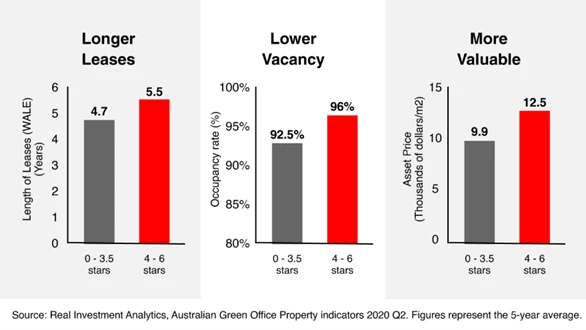
As more building owners in the UK and EU prepare for performance-based disclosure regimes, we believe tools like NABERS—and smart building platforms like GENESIS—will play a central role in the next era of intelligent buildings.
Ready to talk about NABERS enablement?
Whether you're an FM team, property owner, or Master Systems Integrator (MSI), we can help you prepare your buildings and projects for NABERS—and go beyond compliance to unlock continuous value.
Contact us or explore our smart building solutions.
Want to learn more?
If you’re curious about how NABERS connects with broader policies like Building Performance Standards—or how it differs from other building performance measures—the FAQs below provide a quick reference.
FAQ: Understanding Building Performance Standards (BPS) and NABERS
Q: What are Building Performance Standards (BPS)?
BPS are outcome-based policies that require existing buildings to meet specific energy or emissions performance targets over time. Unlike building codes, which apply at construction or major renovation, BPS drive continuous improvement in building operations. Learn more from the U.S. Department of Energy.
Q: How do BPS relate to NABERS?
While BPS set mandatory performance targets, NABERS is a voluntary rating system that measures and benchmarks building performance, particularly in areas like energy, water, waste, and indoor environment. NABERS ratings can help building owners prepare for or comply with BPS by providing credible, independently verified performance data.
Q: How is NABERS different from traditional Energy Performance Certificates (EPCs)?
EPCs estimate a building’s performance based on design and modeled data at a single point in time. NABERS measures actual operational performance using verified data—giving a more accurate and ongoing view of building efficiency.
Q: What is NLA in NABERS ratings?
NLA stands for Net Lettable Area—the floor space available for lease to tenants. In NABERS, energy intensity is often expressed as kilowatt-hours per square meter of NLA per year (kWh/m²/year), enabling fair comparisons between buildings of different sizes.

Written By:
Recent Posts
How One Manufacturer Advanced Its Industrial Digital Transformation

Why Food & Beverage Manufacturers in APAC Are Rethinking Operations and Turning to Automation Platforms

If You’re Going to Invest in SCADA, Invest in Quality

Shifting the Focus in Industrial System Integration: Prioritizing Standards, Minimizing Tools, and Focusing on Process Expertise Over Multi-Vendor Tech Builds

How to Build a Best-in-Class Industrial Facility in a Multi-Vendor World