English
 Czech
Czech
 German
 French
 Italian
 Japanese
 Polish
 6 min read
What You’ll Learn
Discover how Odense University Hospital (OUH) in Denmark modernized its legacy building management systems (BMS) to gain centralized visibility and control across its Svendborg campus.
This blog explores how they replaced outdated, disparate systems with the GENESIS platform from Mitsubishi Electric Iconics Digital Solutions, delivered in partnership with AutomationLab (now part of Init).
Whether you’re managing aging infrastructure or planning a scalable smart building strategy, you’ll gain insights into:
- Replacing disparate automation systems with a modern, centralized BMS
- Achieving unified control across multi-vendor platforms
- Improving efficiency in monitoring, alarms, and energy use
- Enabling scalable, adaptable facility operations for the future
Aging Buildings, Disconnected Systems, and No Centralized “Eye on the Hospital”
Picture this use case.
You’re responsible for monitoring a portfolio of older buildings, each equipped with its own automation system. The systems are outdated and disparate. They don’t communicate. There’s no centralized dashboard, no unified data stream, no single “eye on operations.”
That was the situation facing Odense University Hospital at its Svendborg campus in Denmark’s Region of Southern Denmark.
The Challenge: Disparate Systems Across an Aging Campus
OUH operates four academic and community hospitals in the eastern part of the Region of Southern Denmark, including Svendborg Hospital—a key medical facility and one of the region’s most important training sites for healthcare professionals. The hospital works closely with the University of Southern Denmark and supports approximately 2,500 trainees annually.
But the infrastructure at the Svendborg campus told a different story. Buildings were outfitted with disparate and outdated automation systems, making it difficult to oversee facility operations or maintain consistent conditions across the campus.
The hospital needed a centralized, flexible, and modern system to improve visibility, monitoring, and control.
The Solution: A Centralized BMS with GENESIS
OUH chose to work with AutomationLab (now Init), a Denmark-based system integrator with deep expertise in controls, software integration, and electrical projects. With three offices in Denmark—including its headquarters in Svendborg—AutomationLab was strategically positioned to deliver the project. As a longtime partner of Mitsubishi Electric Iconics Digital Solutions, AutomationLab selected the GENESIS64 smart building platform as the backbone of OUH’s new centralized BMS.
GENESIS provided the hospital with a modern, open system capable of replacing disparate, outdated automation platforms with one unified solution.
Transforming Building Operations with Centralized Control
The centralized platform transformed building operations at OUH’s Svendborg campus, bringing formerly disconnected systems under one umbrella. With GENESIS, the hospital now has:
- Integrated HVAC and ventilation monitoring to ensure patient comfort while optimizing energy use
- Smart outdoor lighting and energy controls to improve visibility and reduce operational costs
- Alarm routing and remote monitoring between campuses, enabling efficient after-hours response without on-site overnight staff
- Standardized, reusable templates that make the interface intuitive for both hospital staff and external maintenance teams
- Unified data logging and analytics that simplify reporting and enable smarter, faster decision-making
For the operations team, this shift brought clarity and efficiency. Instead of juggling multiple, disconnected systems, staff gained a single, unified interface for daily monitoring and long-term planning.
“With GENESIS, we have an open system based on open standards which allows our own staff to maintain and expand the use of the system.”
— Lars Due Andersen, Manager of Building, OUH Svendborg
That flexibility means the hospital can continue to evolve its BMS solution—integrating new buildings, enhancing functionality, and extending capabilities over time without costly rework or disruption.
Tangible Benefits of Smart Building Management: Visibility, Control, and Efficiency
The implementation of GENESIS at OUH’s Svendborg campus is delivering measurable, real-world benefits:
- Improved working conditions: Operations staff now interact with a single, streamlined system instead of piecing together data from multiple platforms.
- Reduced labor burden: Remote alarm routing and escalation mean that after-hours staff no longer need to be physically present on site, reducing overnight staffing demands.
- Stronger energy performance: With integrated monitoring of HVAC, ventilation, and lighting, the hospital can balance patient comfort with energy efficiency—reducing both costs and carbon footprint.
- Simplified maintenance and training: Standardized templates make it easier to train staff and external technicians, while ensuring consistency in how systems are managed.
- Faster decision-making: Unified data logging and analytics allow the hospital to generate reports quickly, identify trends, and make informed operational adjustments.
- Long-term scalability: GENESIS has become a foundation that grows with the organization's needs, supporting OUH's ongoing operational expansion.
As Andersen explains: “We are continuously adding assets and buildings to our GENESIS BMS solution.”
These benefits are not unique to OUH. They reflect what the GENESIS building automation platform was designed to deliver: a flexible, open, and scalable foundation that helps organizations modernize operations across industries and geographies.
The GENESIS Smart Building Platform
GENESIS by Mitsubishi Electric Iconics Digital Solutions is more than a building management system. It is a flexible smart building platform designed to unify disparate systems, simplify operations, and provide a foundation for long-term efficiency and growth.
Key capabilities include:
- Open connectivity: Native support for industry standards such as BACnet, Modbus, and OPC UA, enabling integration across multi-vendor environments.
- Modular design: Start with core functionality and expand into analytics, fault detection, energy management, and more—without replacing the platform.
- Visualization and control: Intuitive dashboards and standardized templates give operators a clear, centralized view of building performance.
- Scalability: From a single facility to multi-campus deployments, GENESIS adapts without forcing costly rework or disruption.
- Sustainability enablement: Centralized data and analytics help organizations identify inefficiencies, optimize usage, and support environmental goals.
For OUH, these capabilities turned a patchwork of outdated systems into a cohesive, modern BMS that delivers both operational value and strategic flexibility.
The Takeaway: From Disparate Building Systems to Advanced Centralized Control
Managing older buildings with disparate, outdated systems and no centralized view proliferates inefficiency, limits visibility, and restricts operational growth. But modernizing with a platform built for integration and extensibility transforms that challenge into an opportunity.
Odense University Hospital’s Svendborg campus shows how it’s done. By implementing the GENESIS smart building platform, the hospital gained centralized control, simplified daily operations, and laid a flexible foundation for expansion.
This isn’t just an upgrade—it’s a transformation. OUH replaced disconnected systems with a unified, intelligent environment that serves both patients and staff more effectively. And the journey doesn’t stop there: the hospital continues to add assets and buildings to the GENESIS solution, proving that the platform grows as they grow.
That is the real power of GENESIS. It’s not simply about replacing outdated systems—it’s about building a smarter, more resilient operational backbone that keeps delivering value for years to come.
Frequently Asked Questions (FAQ)
What is a Building Management System (BMS)?
A BMS is a software platform that integrates and controls building services such as HVAC, lighting, alarms, and energy management. It provides operators with centralized visibility and control across facilities.
Why was GENESIS chosen for Odense University Hospital’s Svendborg campus?
The hospital needed to replace disparate, outdated systems with a centralized platform that was flexible, scalable, and based on open standards. GENESIS was selected for its ability to unify systems, simplify operations, and enable ongoing expansion.
How does GENESIS handle interoperability across different vendors’ equipment?
GENESIS supports open standards such as BACnet, Modbus, and OPC UA, along with integrations from trusted partners. This ensures seamless connectivity across multi-vendor environments without costly middleware.
Is GENESIS scalable from one building to multiple facilities?
Yes. GENESIS was designed with modular architecture and scalability in mind. Organizations can start with a single building and expand to multi-site campuses or entire portfolios without rework or disruptive platform changes.
What benefits can hospitals and large facilities expect from deploying GENESIS?
GENESIS simplifies monitoring and control, reduces labor demands, improves energy efficiency, and provides a foundation for scalable, long-term growth.
Just as Odense University Hospital achieved greater control and efficiency with GENESIS, your organization can unlock the same benefits. The resources below are a great place to start:
- Read the full success story
- Download our GENESIS brochure to understand its advanced capabilities
- Contact us to speak with a smart building expert

Written By:
Recent Posts
Driving Digital Transformation in Southeast Asia’s Oil and Gas Industry

Smarter Building Operations Start with Fault Detection and Diagnostics (FDD) Software
Key Terms Defining Leading Industrial Automation Software for SCADA, BAS, FMS, EMS, MES, DCIM and More

5 Facility Management Nightmares a Building Operating System Can Fix
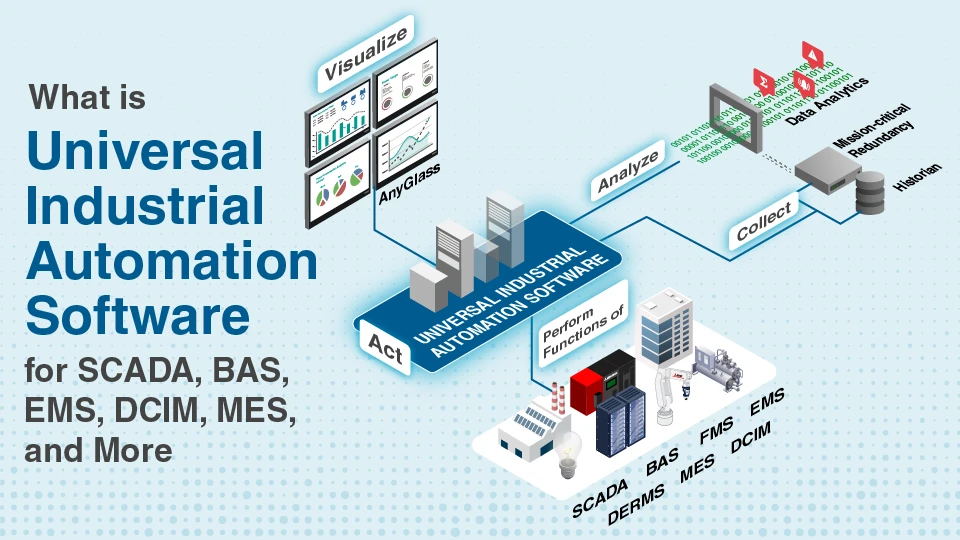
What Is Universal Industrial Automation Software for SCADA, BAS, EMS, DCIM, MES, and More